DreamWorks Animation · Enterprise UX · Pipeline platform
2015 – 2016
Production Platform
for a Studio of 1,500
A connected production platform for DreamWorks Animation — one data model surfaced across artist stations, supervisor tools, and executive visibility (including Asset Costing Gantt views).
Client
DreamWorks Animation
Role
Principal Design Technologist
Focus
Design system · Pipeline UX · Desktop + web · Graph-native tools
Tools
Figma · Illustrator · Python · Cmd-line tooling · Specs
01
Studio context
Internal software for feature animation — review, scheduling, asset tracking, costing, and artist-facing consoles — where failures show up as lost hours on the floor, not a ticket in a consumer app store.
Shipped products included Artist Console MVP — adoption climbed toward broad artist use with measurable efficiency gains (internal study: ~3–7%); Asset Costing MVP for leadership visibility into render cost; Action Flow for graph-native supervisor workflows.
“Design technologist work here meant prototypes, specs, and sitting with engineers — not just redlines.”
02
Platform architecture
A connected system across three user tiers
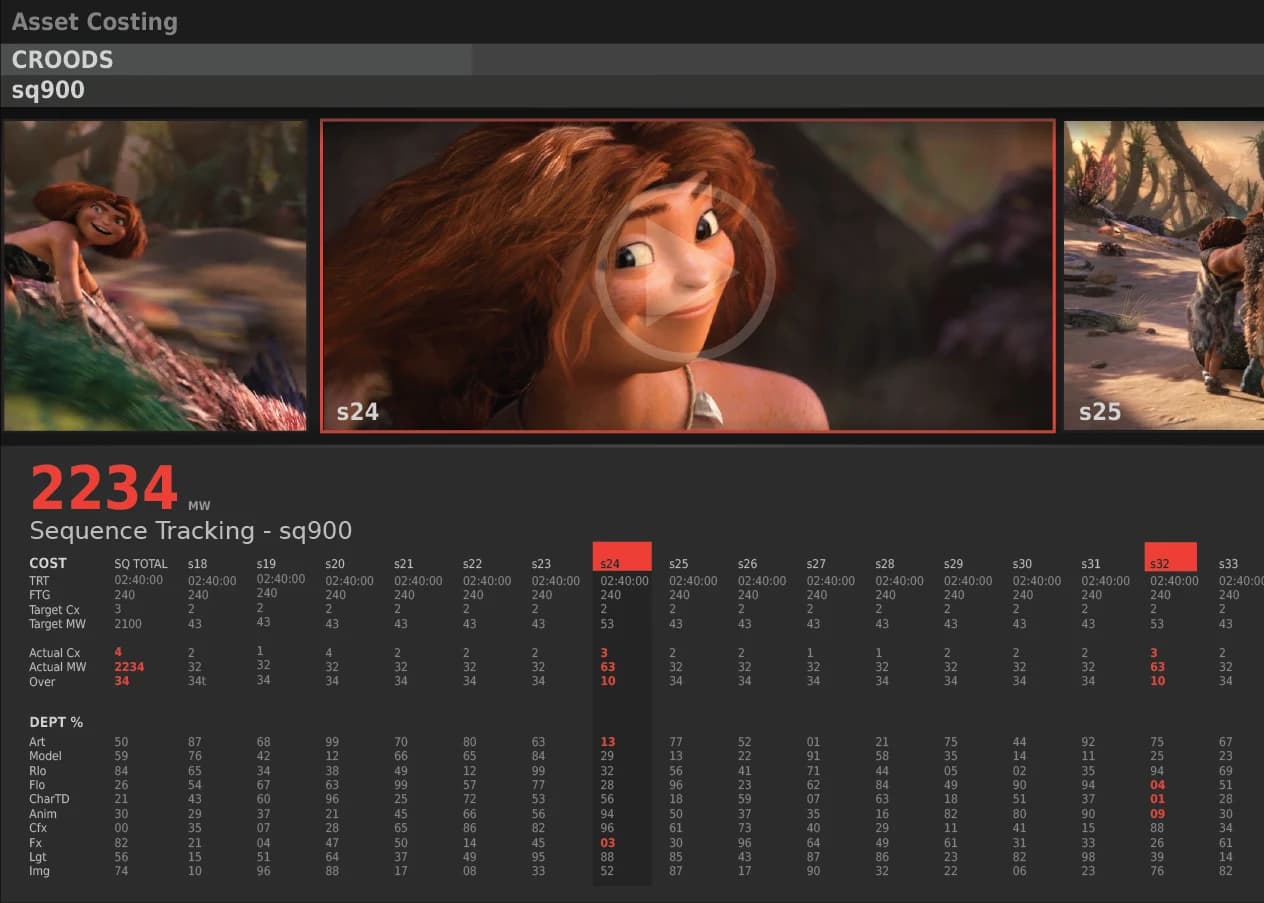
Asset Costing — sequence view (CROODS)
The system wasn't three tools — it was one data model surfaced at different zoom levels: artists in Artist Console, supervisors in Action Flow, executives in Asset Costing's Gantt roll-up. Same entities, different density and intent.
03
Artist Console
Artist Console · Asset Costing · Action Flow
01
Discovery
Interviews and observation with artists, coordinators, and supervisors to map critical paths and pain points.
02
System design
Component libraries, layout grids, and documentation for dense operational interfaces.
03
BUILD
On implementation, performance, and delivery. ~2 designers per tool team — from Artist Console through Action Flow prototypes.
04
Iterate
Feedback tools after each release to refine patterns and note exceptions that undermined consistency.
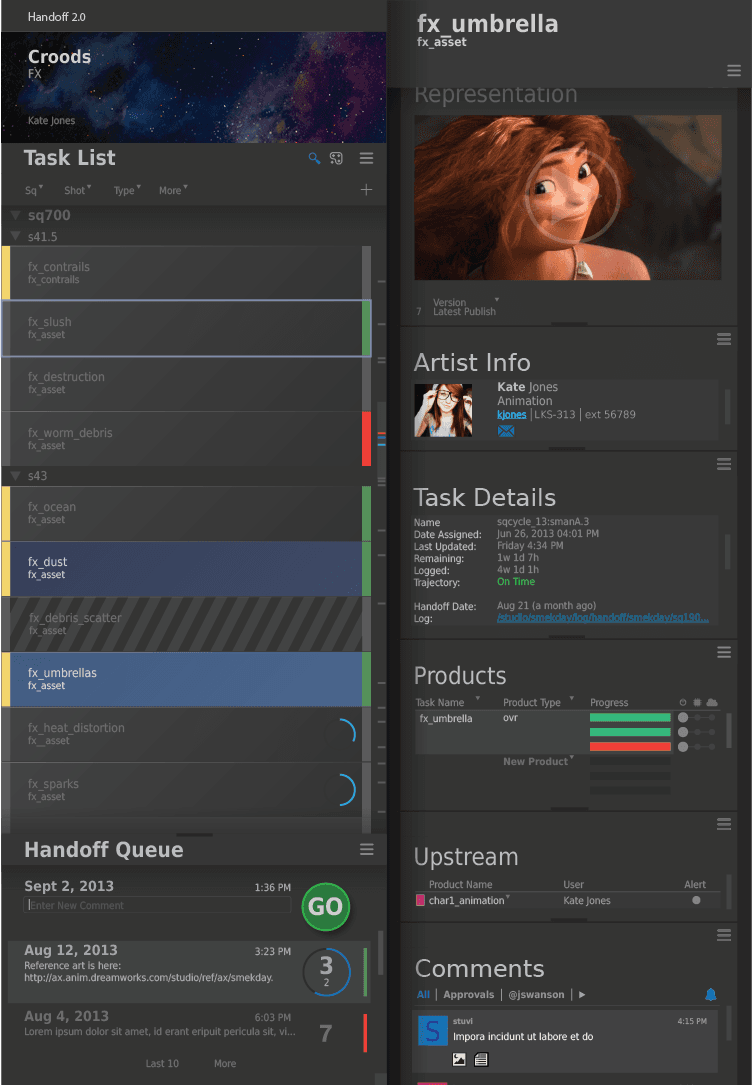
Artist Console
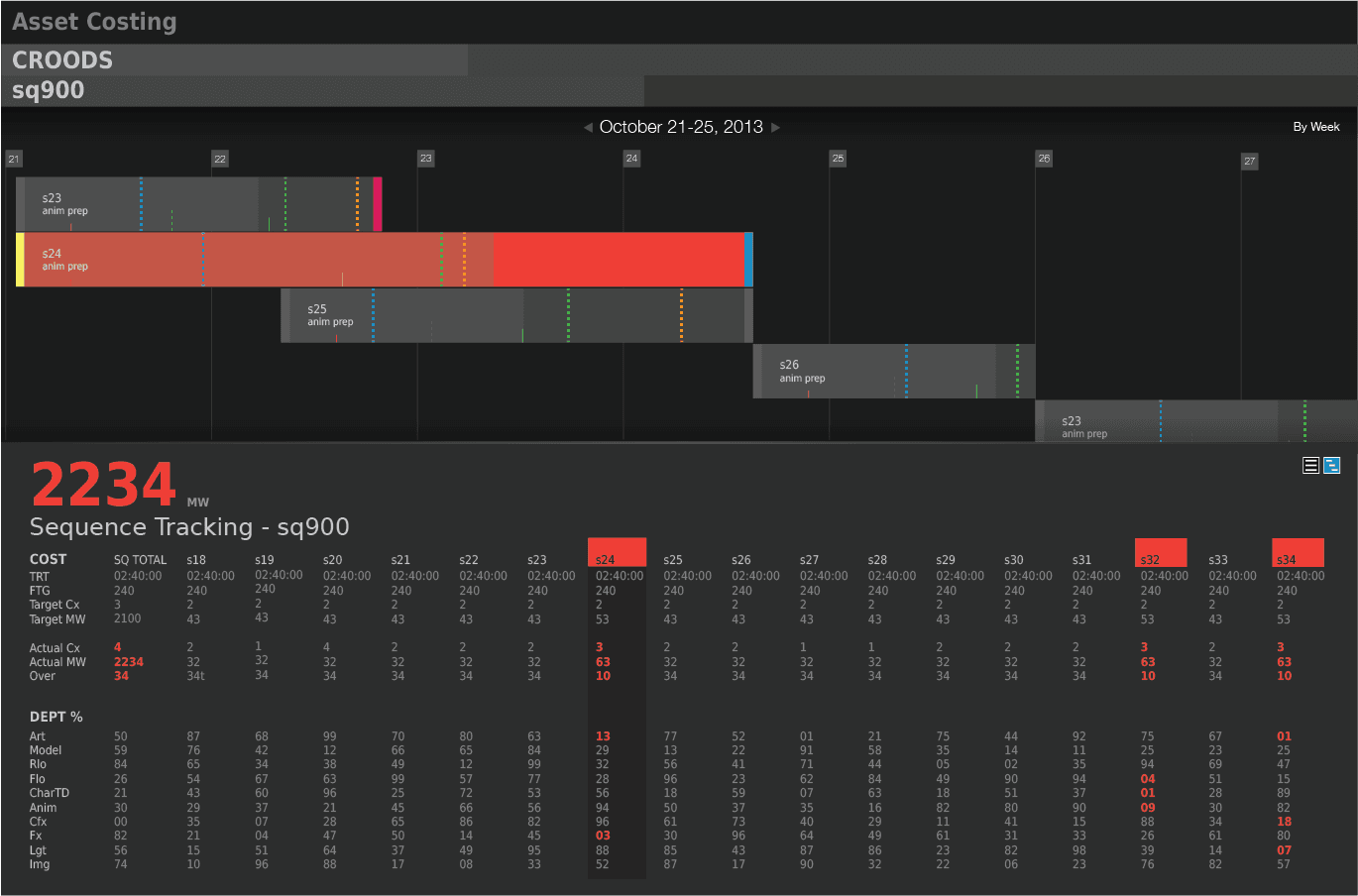
Asset Costing — sequence view
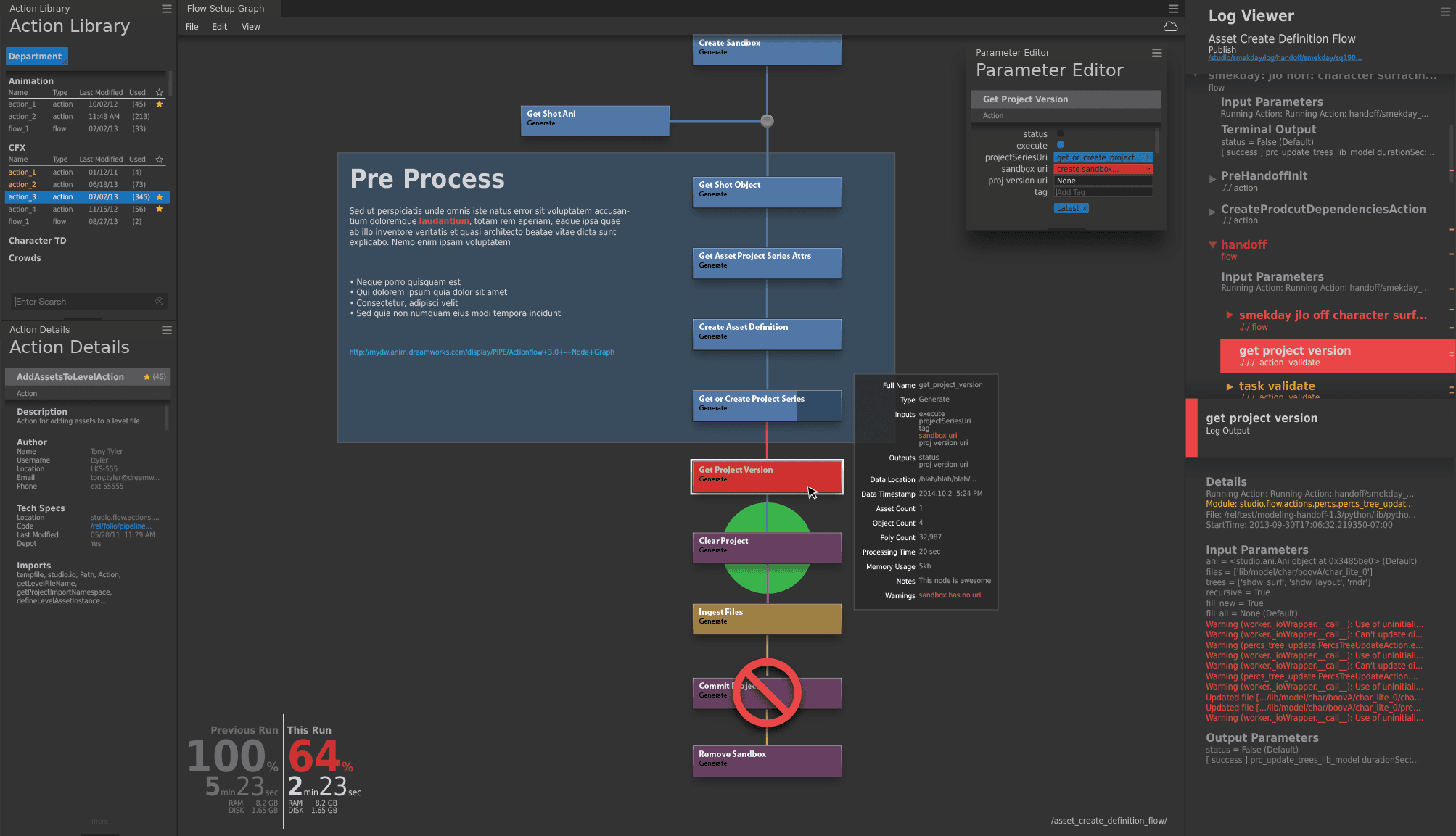
Action Flow — node graph
Artist Console was the data origin point: artists received tasks, logged progress, and surfaced blockers in the same record set that downstream tools consumed.
Pipeline-facing products had to survive long sessions, keyboard-heavy workflows, and frequent context switching between shots, departments, and review cycles.
04
Action Flow · Adoption & governance
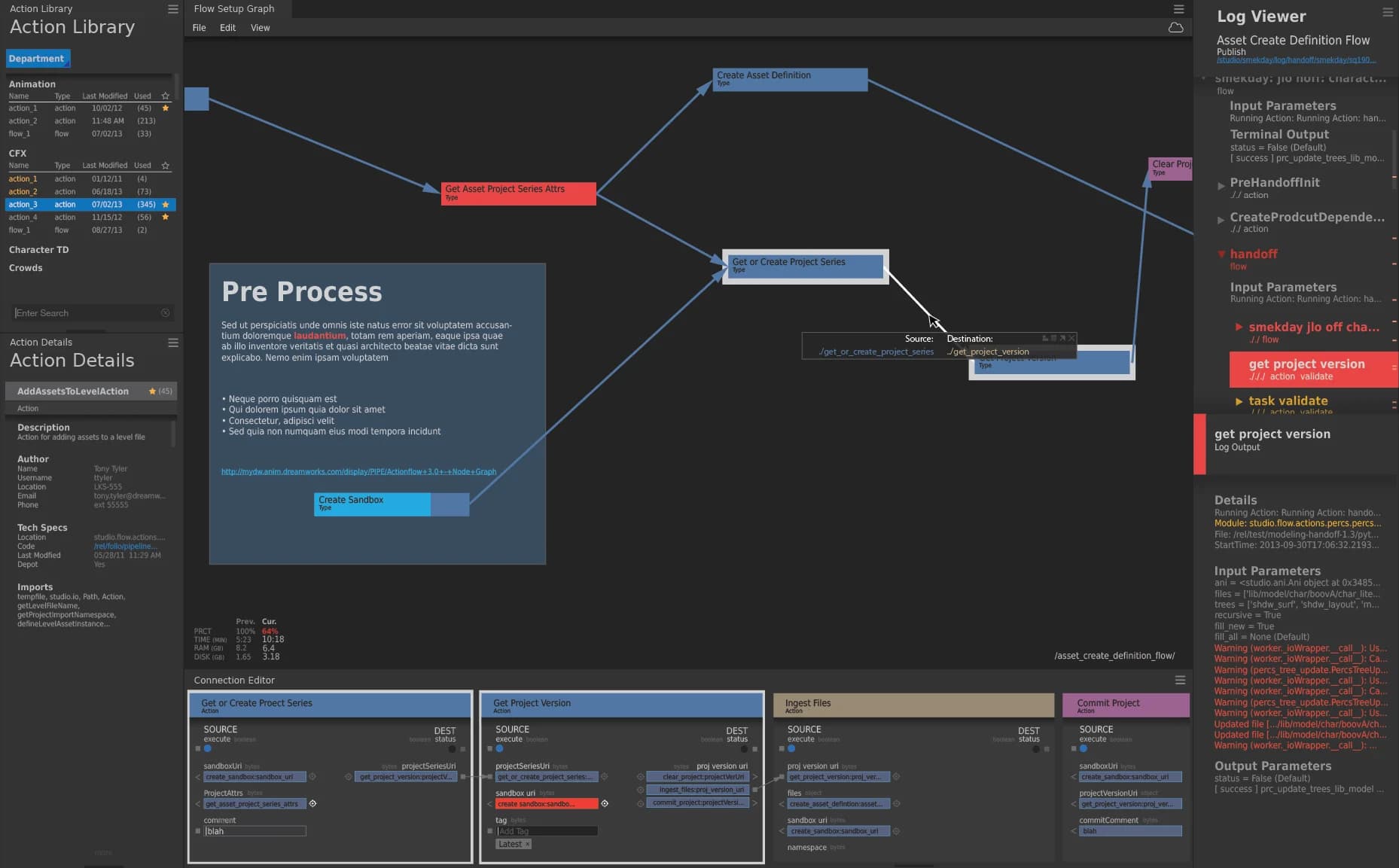
Action Flow — flow setup graph & connection editor
Training & rollout
Worked with production managers and tech artists to onboard teams incrementally without disrupting active shows.
Action Flow
A visual programming tool letting supervisors define and sequence pipeline actions with live validation and execution logs.
Executive visibility
Asset Costing's Gantt view rolled the same data up to the slate level — leadership could see where sequences were tracking against plan.
The same data model. Three levels of zoom. Every decision — from hopper refill to exec review — stayed attached to the same underlying records.
05
Outcomes
1500+
Daily users
Studio-wide internal users on rotational engagement across departments and tools.
3
Flagship programs
Artist Console MVP plus Asset Costing MVP and Action Flow prototype program — each with different org models and constraints.
0→1
Studio design system
No prior precedent for a unified internal language; established atoms through templates and guidance as tools extended.
Component Catalog
Atoms through templates documentation with clear do / don't examples for dense UIs.
Contribution Model
Review checklist for new patterns before they became cross-product dependencies.
Archive Hub
Central index of specs and reference screens teams could search during implementation.
Next project
Apple — Autonomous Vehicle ToolingInternal AV tooling